
Marketing – it’s all in the brandname, right?
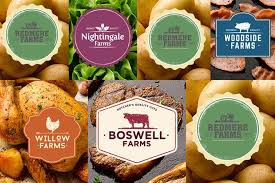
Farm names such as Rosedene, Ashfield, and Birchwood sound quintessentially British right? Which is why 60% (*) of us said we buy them, right?
Erm nope, more often than not, supermarkets plaster these fictitious but local-sounding brandnames all over their packaging, whilst at the same time importing the food inside from overseas countries.
(*) Three in five people said they would feel misled if they were informed that the product came from a country outside the UK
1. The worst culprit … step forwards Tesco
It seems that after its succession of horsemeat and accounting scandals, Tesco has been once again the supermarket flying ‘closest to the edge’ regarding made-up farm names.
Back around Mar-16, Tesco launched (to no fanfare whatsoever!) seven made-up farm name brands – Redmere, Rosedene, Woodside, Willow, Boswell, Nightingale, and Suntrail Farms – to replace its ‘Everyday Value’ range.
These all invited the customer to assume that the food inside was British, without ever stating this explicitly on the packaging.
Tesco is by no means the only offender though – Aldi has the ‘Ashfield Farms’ brand but made a commitment to only source British produce in their fictional farm brands by end Mar-17.
Morrisons also ‘jumped off’ the bandwagon in August 2017, saying that it intended to drop all products branded with fake farm names.
In fact, Morrisons went one step further, inviting real farmers into its stores to bridge the gap between the consumer and food producers, following research which showed that 46% of shoppers had never met a farmer, and over 50% had no knowledge on how the food they bought was actually grown.
“Supermarket customers are sometimes presented with misleading images of farmers on their food and we believe that by meeting our real farmers, customers will see and value that we know where our food comes from.”
-Joe Mannion, head of British livestock at Morrisons
2. Is the consumer always right though?
In fact, the only farm name product which was found to be 100% British was Boswell Farm chicken, and this featured a Union Jack prominently on the label, so Tesco argues that consumers shouldn’t have been deceived.
A Tesco spokesperson said:
“We’ve named the brands after farms to represent the quality specifications that go into every product across the range.
However, this overlooks the concerns of the any other businesses with the same name; for example, Boswell Farm is actually a holiday cottage business which has already been on the wrong end of numerous tweets complaining about its produce.
3. What is the position going fowards?
The NFU has challenged the use of labels which imply the produce originated from a British farm, when in reality, either the produce came from abroad or the British farm did not exist….or both of the above!
Conclusion
It is clear that customers value authenticity, and once that trust is gone, it can be very difficult to regain.
So a word to the wise when marketing and thinking up catchy names – be careful what you promise…it could be your undoing!



Leave a Reply
Want to join the discussion?Feel free to contribute!