
How to WRITE great Case Studies…..

Want to write great Case Studies? Follow these simple steps….
- Preparation
- Interview
- Write-up
- Approval
- Design
Preparation

Probably the most vital part to writing a good Case Study, is to know in advance what outcome you are looking for, hence the need to ‘interview’ your client first.
I always find the 5 W’s a useful reminder:
The 5 W’s
- Who – is the audience? General public, teccies, marketing managers, CEOs…?
- What – problems do they usually face and what are the benefits of your solution (both quantitative and qualitative)?
- Where – do they buy your product/service?
- Why – do they buy from you versus a competitor?
- When – do they make a purchasing decision?
Furthermore, if your client can provide you with a thumbnail sketch of each interviewee, it will save valuable interview time and give you a heads up of the type of questions to ask.
It’s also preferable if the client emails the interviewee (and cc’s you) to confirm that you’ll be carrying out the Case Study interview as:
- It introduces you and saves time when phoning up
- You’ve now got the correct email address
- It minimises the chance of your email going to ‘Junk‘ when you send the Draft write-up through for approval
Interviewing
Once you’re prepared, I find 10-15 minutes is normally enough to get the material you need (assuming a 2-sided Case Study) – much longer and it can be hard to get hold of people, much shorter and you’ll be struggling for decent quotes.
So, I’d rather go for a shorter timeframe, aim to stick to that (“OK, that’s 15 minutes up, is there anything else you’d like to add?”), and chances are, as long as the interviewee is engaged they’ll open up and want to talk for longer.
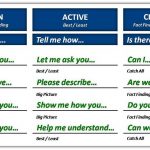
The key here is to ask open questions:
- How did product/service make you feel? [you’re looking for emotions here – relieved, grateful….or negative ones if they had a bad experience with a competitor’s offering – angry, frustrated]
- Could you describe the product/service in 3 words? [forces the interviewee to be creative – something you can then expand upon in further questioning]
- What challenges was your business facing? [nearly everybody likes to talk about their own business….careful though to keep them on track and not run out of time!]

Don’t be afraid to ‘polish’ quotes where necessary, by repeating what the interviewee has said to you with a few ‘tweaks’ of your own:
Would it be fair to say….?
Could we phrase it like this…..?
So the way I understand it is…..?
Write-up
You’ve got all your background and raw material – now all you need to do is to put it all together
- Catchy title – words such as ‘How’, ‘Why’, have far more impact, especially when looking to recycle the Case Study on twitter, linkedin…etc, where the title has to ‘sell it’; e.g. ‘How Company xx doubled their revenues in 6 months’
- Headings/Sub-headings – help to break up the text and ‘guide’ the reader through
- Testimonial quotes – make sure these can stand on their own two feet
- Colloquialisms – leave in when referring to the interviewee (it’s authentic), but keep the narrator’s voice as neutral and grammatically correct
Approval
This stage – getting hold of people to approve the write-up – can often be the most time-consuming, so be patient!
I prefer to email through the plain text, ideally without any formatting, on the face of the email (as opposed to an attachment – you’d be surprised how many can get stuck in Spam/Junk or trigger virus alerts, especially in bigger organisations).
Other points to note:
- Make it easy to ‘edit‘ – if it’s unformatted, the interviewee can add changes directly to the face of the text, in bold or a different colour
- Email confirmation is preferable – this provides you with an audit trail
Design
Ah, well we’ll cover the design options for Case Studies in a forthcoming blog…….it’s a whole subject in itself!



Leave a Reply
Want to join the discussion?Feel free to contribute!