The Grammarian: Punctuation – It’s all Greek to me
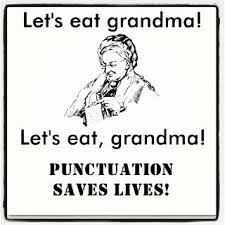
“Proper punctuation is both the sign and the cause of clear thinking. If it goes, the degree of intellectual impoverishment we face is unimaginable” – Lynne Truss
Punctuation through the Ages
Punctuation is a relatively modern affair.
In the olden days, there was no punctuation whatsoever – texts were painstakingly copied out as one long sequence of words.
The Egyptians were the first to introduce accents and marks to indicate where pauses should be taken, but it wasn’t until the introduction of printing in Europe in C15 that punctuation began to catch on in Europe.
In fact, the Church was the main opposition to punctuation, as it didn’t want texts to be easier to read preferring them to be the preserve of the elite.
Where does modern punctuation come from?

In the C15, when printing began to make books more affordable, most texts were written by scholars, and hence in Greek or Latin.
So too were punctuation terms:
Hyphen in Greek is a combination of hypo ‘under’ and hen ‘one’. The Greeks used to write it below the words to indicate that two words were not to be read separately, before they realised the best way to do it was to leave spaces between the words.
Colon meant ‘limb’