
Henley Literary Festival: The Good, The Bad, and The Ugly – what we can learn from structuring presentations.

Not all authors are created equal.
However, with a little pre-planning, all authors should be able deliver a decent performance at a Literary Festival, where (let’s face it) the audience is rarely hostile.
Having recently attended the Henley Literary Festival, I’ve witnessed The Good, The Bad, and The Ugly when it comes to author presentations. Read on…
1. The Good: Crime & Wine Evening / Kate Humble “Thinking on my feet”
Two very different set-ups were at work here:
- Panel discussion (3 writers + moderator) – same question asked to all 3 writers and discussed.
- Traditional 1-on-1 author/moderator – complete with passage readings.
Both worked equally well…because the format was right for each talk…and because in each case the moderator was very effective.
To save time (and space!) I’ll bullet point the key highlights of each:
Kate Humble, “Thinking on my feet”
- Book written in a chronological format (365 separate diary entries – one for each day of the year) so it was easy to jump around and keep the readings seasonal.
- Short readings to illustrate points – surprisingly, not many writers tend to read any of their work out loud at Literary Festivals…which is a bit of a shame given the work has gone into them!
- A conversation between writer & moderator – it does help when they know each other and when the moderator is a professional broadcaster (as was the case here – Beverley Turner), but with a little preparation, some common ground is always possible – it makes the audience feel it is listening to a conversation rather than just being spoken to.
Wine & Crime:
- Interesting themed questions:The importance of location in crime novels? How much research is required? How does the period in which the novel is set influence the plot?….etc.
- Interaction between participants: Always better if there’s a bit of a debate going on (within moderation); makes it seem less like a lecture.
 Vaseem Khan, “The Unexpected Inheritance of Inspector Chopra”
 Jessica Fellowes, “The Mitford Murders”
[Note: there was another author present…but I can’t remember her name, nor can I find it on the internet – sorry!]
2. The Bad: River Readings, WW1 Poetry & Prose
I had attended these River Readings on previous occasions (basically whenever I could get my hands on tickets!) and they had always been one of the highlights of the Festival for me.
Not this year though. Not at all. Very disappointed
The theme was very worthy – WW1 Poetry & Prose to mark the upcoming 100th anniversary of the end of the First World War. However, what ensued was a random reading of (almost all the famous) poems with no theme or categorisation at all.
Hence it turned into a rather bleak and monotonous hour trapped onboard.
How could this have been improved? Well, some attentions to the 5 W’s would have been a good start in providing some structure, and hence interest.
Suggested improvements
- When: a chronology would have been interesting, charting the decline of the initial enthusiasm for war into unease and finally, outright horror.
- Who: the class divide between officers and their troops, the front-line view of soldiers versus the more circumspect view of observers, even Allied versus German poetry…there were so many interesting angles from which this could have been approached.
- Where: the battle fields of the Somme always feature heavily in WW1 literature, but WW1 was far more extensive than this – how did terrain, environment and weather influence what was written?
I won’t go on – you get the picture.
The Poetry Tour at the Oxford Literary Festival showed how it could be done well, arranging the poets by college and providing a brief chronology for each, teasing out and comparing themes along the way.
Related articles:
Oxford Literary Festival – Walking in the Footsteps of the Great Poets
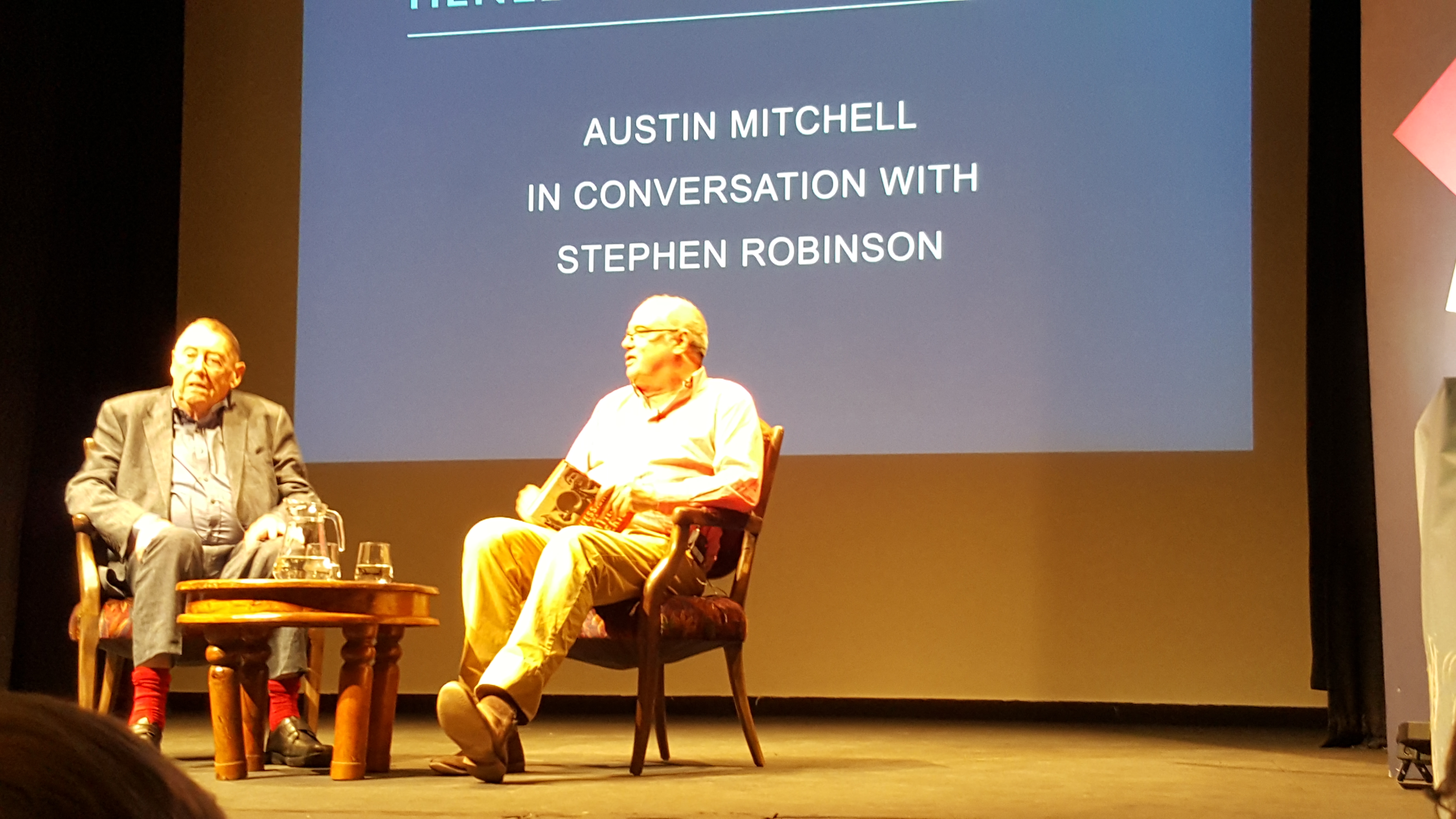
3. The Ugly: Austin Mitchell, “Confessions of a Political Maverick”
“Ugly” issues
- A disengaged moderator: First rule – the moderator is there to facilitate the discussion. That means that when the speaker starts going off-track and rambling on, the moderator should not be reading the book in from of him/her (well, him in this instance).
- Prioritise your best bits: Mitchell had photographic snapshots of his life in politics, many taken illicitly in the Houses of Parliament and accompanied by wry comments: “Cyril Smith…you could always tell when he was in a room because that man belched continuously…plus he was absolutely massive!”. However, owing to time constraints these photos been left to the very end, and so the montage was cut short…and we all felt cheated out of the best bit of the talk!
CONCLUSION
- The importance of a good moderator
- The effectiveness of a well-structured presentation
- Pay attention to The 5 W’s
- Put your best bits first – get the audience onside
- Brief the author beforehand – allow them to express themselves


Leave a Reply
Want to join the discussion?Feel free to contribute!