
Creative thinking v creativity

Creative thinking leads you new ideas whereas creativity brings them into existence…but when does the distinction start? (*)
“The story must grow, naturally and of its own volition – a slow, haphazard, infuriating process, but the only one I know”
-Hammond Innes
The ‘thinking’ precedes the ‘making’ – it’s always important to get that sorted first of all!
However, knowing when to stop thinking and when to start working is probably the most important act of judgement, and one which will vary from person to person.
With the Henley Literary Festival starting today, it therefore seems rather topical to muse on the act of creativity.
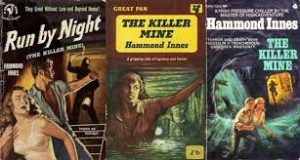 The author Hammond Innes used to start work on a novel usually with only a background, a theme, maybe an opening idea and possibly some idea of a climax. Similarly, the novelist John Fowles used to work on several books at once, constantly reworking and rewriting them, constantly moving from one to the next:
“In 10 years, I may have started as many as 12 books, but finished only 3”
That’s not to say it’s just writers who are flighty (I probably have as many as 20 blogs in draft on the go at any one time) – the principle holds true for all creative types, from musicians to tv producers and even to scientists.
When Edward Jenner began to think he could prevent smallpox by vaccination, his teacher John Hunter, a famous British surgeon advised him:
Don’t think – try it! Be patient, be accurate!
So, it’s not necessary to have a crystal clear idea of where you are going before you start work – ‘working it out as you go along’ is part of the process of creative thinking.
Indeed, Jenner’s creative breakthrough materialised when he redefined the problem from questioning ‘why people caught smallpox?’ to asking ‘why dairymaids did not?’
Programmes are made in the making
This a saying in the tv industry – during the process of ‘working it out’, an idea for a programme may be developed or changed, with new materials constantly added and old ones discarded.
The important point though is to have some sort of procedure for noting down what works, what doesn’t, and why, so that the creative thought process can be revisited at a later date.
To round off this blog, I quite like this saying, on days when things are going quite so well:
If you haven’t worked on the edge of failure, you haven’t worked on the cusp of success
* taken from the book ‘The Art of Creative Thinking’, John Adair



Leave a Reply
Want to join the discussion?Feel free to contribute!